
The Indian Railways is not merely an engineering marvel; it is a dynamic cultural organism that has shaped—and been shaped by—the nation’s literary, cinematic, and social landscapes. In a recent conversation hosted by SBS Radio Australia, the noted cultural historian, Professor (Dr.) Arup K. Chatterjee sat down with the interviewer, the eminent Indo-Australian scholar and journalist, Dr. Amit Sarwal, to trace the railway’s journey from its colonial inception to its modern mythos. Here, we distill their insights into a cohesive narrative that celebrates the railway’s role as India’s living biography.
Inspiration: From Sherlock Holmes to Banaras Toy Trains
When asked by Amit Sarwal where the spark for The Great Indian Railways’ cultural life emerged, Dr. Chatterjee reflected on two childhood impressions. The first was revisiting Sir Arthur Conan Doyle’s The Hound of the Baskervilles, where pivotal scenes unfold between Paddington and Devonshire. “I used to read the same railway passages over and over,” Chatterjee recalls—those vivid train journeys lodged in his imagination long before he became a historian. The second was a simple toy train spotted at Banaras Station at age four. These memories bridged literary fascination with tangible experience: from Kipling and Mark Twain’s depictions to Gandhi’s own famed train rides, all converging in his mind toward a unified cultural epic.
Railways as Biography: Debates, Literature, Cinema, and Beyond
Sarwal notes that India’s railways permeate every cultural medium—from parliamentary debates in the 1840s to today’s documentaries. Chatterjee agrees, framing the railway’s cultural biography as a mirror of the nation’s evolution:
- Parliamentary Debates (1840s–1850s): The birth of the railway began in British political chambers, where speeches and controversies over cost, route, and imperial strategy laid the conceptual tracks long before any steel was laid.
- Literary Depictions (Late 19th Century): As fiction and non-fiction blossomed, writers harnessed the railway as a symbol of modernity, mobility, and colonial power.
- Cinema and Songs (20th Century): Filmmakers wove locomotive imagery into narratives of romance, nationalism, and social change. Iconic films like Devdas situate the station as a gateway to both personal longing and national unity.
- Advertisements and Merchandise: Posters, tea tins, travel trunks, and even Lascar folklore became ancillary industries, extending the railway’s presence into everyday life.
- Documentaries and Digital Media: Today, as memory fades, filmmakers strive to recapture the railway’s storied past—even as cinematic references grow scarcer.
Myth and Reality: Connecting—or Dividing—India
One of the most enduring narratives holds that the railways “connected India.” Sarwal asks: is this national integration a concrete achievement or merely a romantic myth? Chatterjee offers a nuanced take. The British indeed provided two enduring legacies—the English language and the railway network—both of which India adopted post-independence. Yet, the idea of seamless unity masks early inequities: famines of the late 19th century were exacerbated by railways channeling grain away from suffering regions, while the cost of construction fell on Indian taxpayers. For nearly a century, Chatterjee argues, the railways were as much an instrument of division—economic and social—as they were of physical connection.
It wasn’t until well into the 20th century that popular culture reclaimed the train as a national symbol. Bollywood’s romantic station scenes, nationalist documentaries, and family dramas began to recast the rails as threads stitching together India’s diverse tapestry. The tale of Devdas arriving in a steam locomotive becomes emblematic: the train is not just a prop but a metaphor for collective aspiration.
The Architectural Spectacle and Colonial Power
Beyond metaphor, Sarwal and Chatterjee discuss the railway’s architectural legacy. Stations like Howrah and Chhatrapati Shivaji Terminus stand as Gothic beacons of colonial authority—grand structures meant to inspire awe and even intimidation. These edifices served a dual purpose: functional hubs of commerce and symbols of imperial might. Their imposing facades announced to every traveler that the empire’s reach was both vast and unapologetically magnificent.
Personal Favorites: Songs, Snacks, and Social Life
As the conversation turns personal, Sarwal invites Chatterjee to share his favorite cultural artifacts of the railway. The historian cites:
- Literary Echoes: Beyond Doyle and Kipling, the Darjeeling Himalayan Railway song in Aradhana evokes misty mountains and romantic nostalgia.
- Train Cuisine: From roadside chai stalls forcing the “worst tea” on unsuspecting travelers to colonial-inspired menus on certain routes, Chatterjee appreciates the melting-pot of regional flavors aboard long-haul trains.
- Political Memories: Recollections from his own travels—tea vendors’ banter, the rattle of carriages, and the camaraderie of third-class compartments—remain indelible.
He emphasizes that the train’s true inspiration lies in its convergence of India’s myriad cultures: “Nothing could have been more inspiring than diverse communities sharing a single journey.”
Looking Ahead: New Histories and Fictional Possibilities
Finally, Chatterjee offers a glimpse of future projects. He is crafting a fresh “small history of India” told through unexpected objects—an approach akin to his railway study. Simultaneously, he is drafting a novel set between 1910 and 1920, featuring real-life literary figures interacting in plausible but unrecorded episodes. This imaginative reconstruction aims to explore “possible improbabilities” of history, blurring fact and fiction to reveal deeper truths.
Concluding Remarks
Through Dr. Amit Sarwal’s probing questions and Dr. Arup K. Chatterjee’s erudite reflections, we see the Indian Railways not as static steel tracks but as vibrant cultural arteries. From colonial debates to cinematic moments, from Gothic stations to roadside chai stands, the railways have carried India’s stories—both triumphant and tragic—across time and terrain. As Chatterjee’s work reminds us, understanding the railway’s cultural life is tantamount to understanding India itself: a nation perpetually in motion, ever weaving its past into an unfolding journey.
Note from SBS Radio Australia
Arup K. Chatterjee’s book ‘The Purveyors of Destiny’ is a cultural biography of the Indian railways that takes readers on a journey of cultural representations of the railways in Indian literature, film and advertisements.
Arup K. Chatterjee has written a cultural biography of the Indian railways. The book is titled, The Purveyors of Destiny.
It is replete with anecdotes from colonial and postcolonial accounts. Arup takes readers on a journey of cultural representations of the railways in Indian literature, film and advertisements. He says “From Rudyard Kipling to Mark Twain to RK Narayan to Ruskin Bond – the aura of Indian trains and railway station has enchanted many.” “And, what with iconic railway cinematography from Aradhana, Sonar Kella, Gandhi, Dil Se, or Parineeta, Indian cinema has forged mythical railroads in the Indian psyche,” adds Arup.
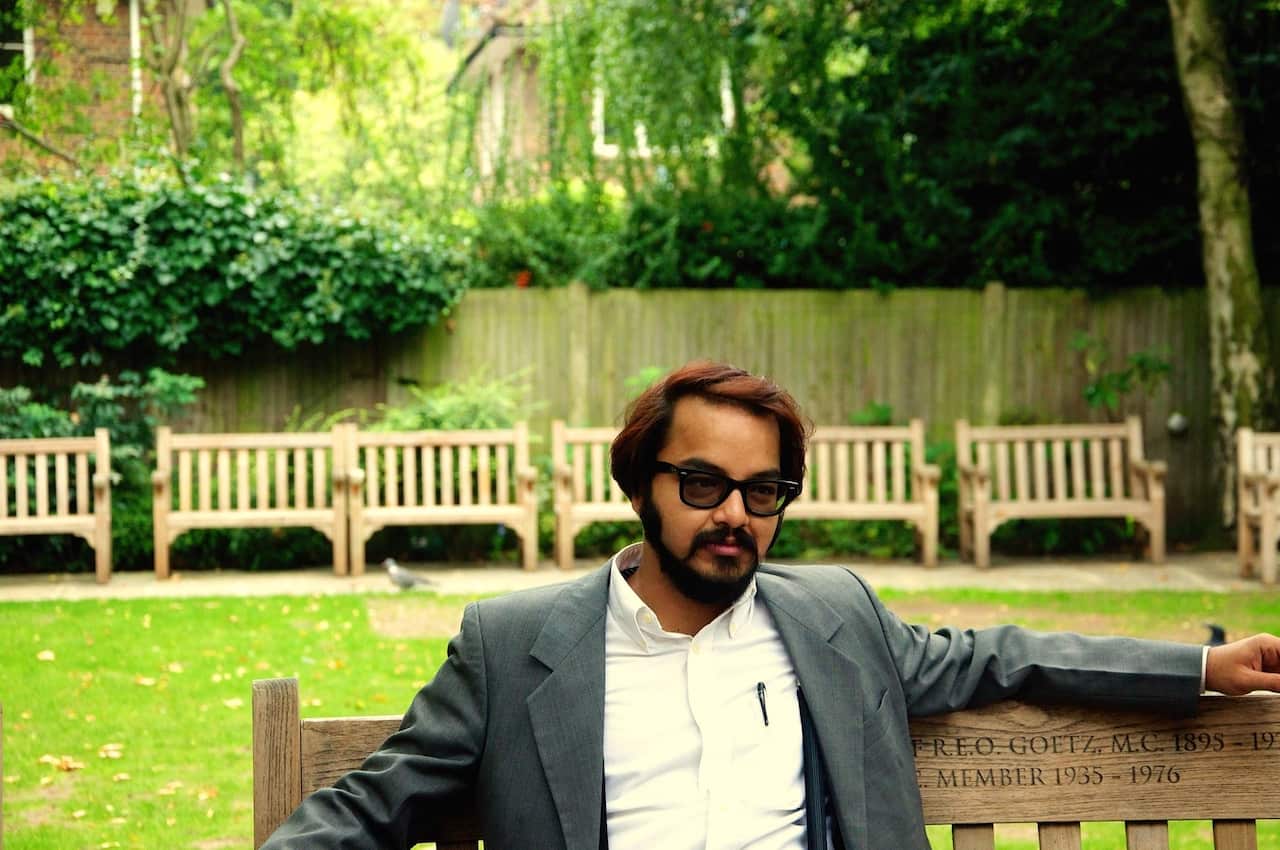
To know more about Arup’s The Purveyors of Destiny, listen to his conversation with Amit Sarwal.
 Arup K. Chatterjee